Introduction
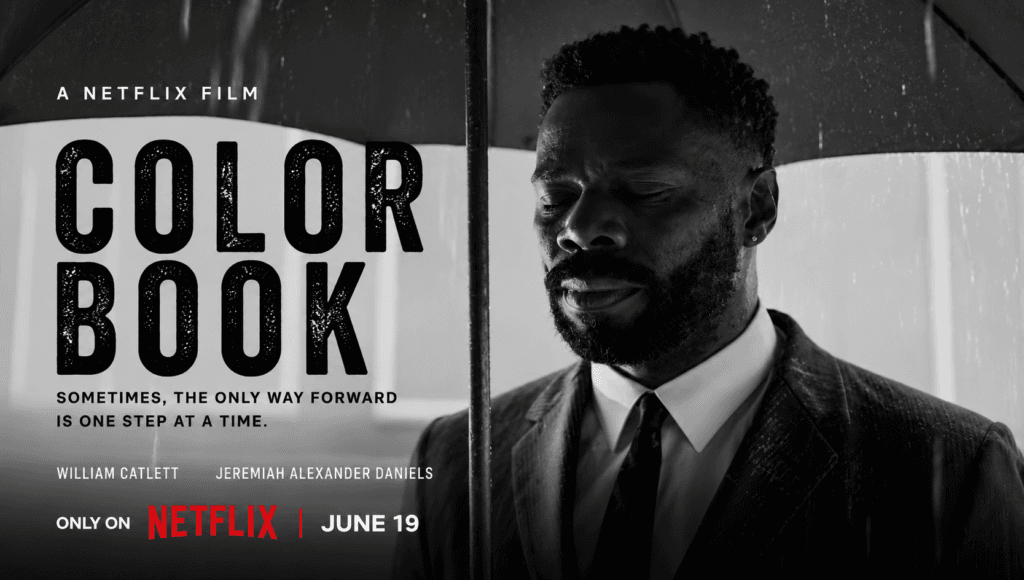
Netflix continues to expand its library of powerful independent dramas, and few recent releases have generated as much emotional praise as Color Book. Directed by debut filmmaker David Fortune, the film tells a moving story about grief, fatherhood, resilience, and the unbreakable bond between a parent and child. Shot entirely in striking black-and-white cinematography, Color Book stands out as one of the most intimate and heartfelt dramas to arrive on Netflix in 2026. Color Book Netflix Movie (Netflix)
At its core, Color Book follows Lucky, a recently widowed father struggling to adjust to life after the loss of his wife. While navigating his own grief, he must also care for his young son Mason, who has Down syndrome. Seeking a moment of happiness amid difficult circumstances, Lucky decides to take Mason to his first professional baseball game. What begins as a simple outing soon turns into an emotional journey across Atlanta filled with unexpected challenges and life-changing moments. (Netflix)
Since its premiere on the film festival circuit, Color Book has earned praise for its authentic performances, compassionate storytelling, and sensitive portrayal of disability and family relationships. Critics have highlighted the chemistry between lead actors William Catlett and Jeremiah Alexander Daniels, while audiences have connected deeply with the film’s themes of love, loss, and perseverance. (Decider)
The movie first attracted industry attention after director David Fortune received major funding through the AT&T Untold Stories initiative, helping transform his vision into a feature-length film. Following successful screenings at festivals including Tribeca, the movie eventually secured a Netflix release, bringing its emotional story to a worldwide audience. (Netflix)
For viewers looking for a thoughtful drama that focuses on character rather than spectacle, Color Book offers a deeply human experience. The film explores not only grief but also hope, showing how small moments of connection can help people move forward after devastating loss.
Movie Information
| Information | Details | |
| Movie Title | Color Book | |
| Genre | Drama | |
| Director | David Fortune | |
| Writer | David Fortune | |
| Main Cast | William Catlett, Jeremiah Alexander Daniels, Brandee Evans, Terri J. Vaughn | |
| Producers | Autumn Bailey, Kiah Alexandria Clingman, Kristen Uno | |
| Country | United States | |
| Language | English | |
| Runtime | Approximately 98–105 minutes | |
| Filming Location | Metro Atlanta, Georgia | |
| Cinematography | Black-and-white photography | |
| Festival Premiere | Tribeca Festival | |
| Netflix Release Date | June 19, 2026 | |
| Streaming Platform | Netflix | (Netflix) |
Story and Plot
The emotional foundation of Color Book lies in its simple but powerful premise. Following the death of his wife, Tammy, Lucky finds himself raising his son, Mason, alone for the first time. The loss has affected both father and son in profound ways, leaving them searching for stability and comfort in a world that suddenly feels unfamiliar. (Tribeca)
Mason is an energetic and lovable young boy with Down syndrome who enjoys drawing in his color book and spending time with his father. While he may not fully understand the depth of the tragedy that has changed their lives, he feels the absence of his mother in his own way. Lucky, meanwhile, carries the burden of grief while trying to remain strong for his son. (Tribeca)
Hoping to create a positive memory and bring some joy back into their lives, Lucky plans a special day: taking Mason to his first professional baseball game. The outing appears straightforward at first, but a series of unexpected setbacks transforms their trip into a day-long adventure across Metro Atlanta. Missed transportation, delays, misunderstandings, and various obstacles continually threaten to derail their plans. (Rotten Tomatoes)
As the journey unfolds, the audience gains a deeper understanding of both characters. The film uses everyday situations to explore larger emotional themes, showing how grief can affect communication, patience, and personal identity. Lucky’s struggles are portrayed with honesty, highlighting both his strengths and vulnerabilities as a father. Mason’s perspective brings warmth and optimism to the story, reminding viewers that joy can still exist during difficult times. (Seattle’s Child)
Unlike many dramas that rely on dramatic twists or major plot revelations, Color Book focuses on human connection. The emotional impact comes from observing ordinary moments between a father and son who are learning how to navigate a new reality together. This grounded storytelling approach has been one of the film’s most praised qualities. (Variety)
Themes of Grief, Family, and Hope
One of the reasons Color Book resonates so strongly with audiences is its exploration of universal emotions.
Grief
The film presents grief not as a single event but as an ongoing process. Lucky’s struggle reflects the reality of losing a loved one while still needing to fulfill daily responsibilities. (Decider)
Fatherhood
At its heart, Color Book is a story about a father trying his best. Lucky is not portrayed as perfect, but his determination to care for Mason creates some of the movie’s most powerful moments. (Seattle’s Child)
Disability Representation
The film thoughtfully depicts Mason as a fully realized character rather than reducing him to a diagnosis. His personality, interests, and relationship with his father are central to the story. (Rotten Tomatoes)
Resilience
Despite numerous challenges, both characters continue moving forward. Their perseverance becomes a symbol of healing and growth. (Rotten Tomatoes)
Cast and Characters
The success of Color Book largely depends on its performances, and the cast delivers remarkable work throughout the film.
William Catlett as Lucky
William Catlett plays Lucky, the grieving father at the center of the story. His performance balances emotional vulnerability with quiet strength, creating a believable portrait of a parent facing extraordinary circumstances. Critics have frequently cited Catlett’s work as one of the film’s strongest elements. (Decider)
Jeremiah Alexander Daniels as Mason
Making a memorable impression, Jeremiah Alexander Daniels portrays Mason with authenticity and warmth. His natural chemistry with Catlett forms the emotional heart of the film. (Decider)
Brandee Evans as Tammy
Although Tammy’s presence is felt primarily through memory, Brandee Evans helps establish the emotional foundation of the story. Her character’s absence drives much of the narrative. (IMDb)
Terri J. Vaughn
Terri J. Vaughn plays a supporting role that contributes to the broader community surrounding Lucky and Mason. (Netflix)
The Origins of Color Book
Every great independent film begins with a personal story, and Color Book is no exception. Director and writer David Fortune spent years developing the project before it eventually became one of the most celebrated independent dramas of the decade.
Fortune wanted to create a film that explored fatherhood, grief, and disability representation in a way rarely seen on screen. Rather than focusing on sensational drama or exaggerated emotional moments, he envisioned a story grounded in everyday life. His goal was to portray a father and son relationship with honesty, compassion, and authenticity.
The concept eventually attracted attention through the AT&T Untold Stories program, an initiative designed to help emerging filmmakers bring original stories to life. Winning support from the program allowed Fortune to transform his screenplay into a full-scale feature film.
For an independent filmmaker, receiving this type of support can be career-changing. The funding provided resources that enabled the production team to hire experienced crew members, secure locations, and complete the ambitious project while maintaining the artistic vision at its core.
The result is a film that feels deeply personal while also speaking to universal experiences.
David Fortune’s Directorial Vision
One of the most remarkable aspects of Color Book is how confident it feels despite being David Fortune’s feature directorial debut.
From the beginning, Fortune emphasized emotional realism over traditional Hollywood storytelling. Instead of relying on major plot twists, he focused on character development and genuine human interactions.
The director has spoken about wanting audiences to feel as though they are walking alongside Lucky and Mason throughout their journey. Every obstacle, conversation, and quiet moment is designed to immerse viewers in the characters’ emotional reality.
This approach creates a deeply intimate viewing experience.
Many modern dramas attempt to manipulate audiences through excessive sentimentality. Color Book takes the opposite approach. The film trusts viewers to connect with the characters naturally, allowing emotions to emerge organically rather than forcing dramatic reactions.
That confidence is one of the reasons critics responded so positively to the film.
Why the Film Was Shot in Black and White
Perhaps the most immediately striking feature of Color Book is its black-and-white cinematography.
At first glance, the decision may seem unusual for a contemporary Netflix drama. However, the creative choice serves several important purposes.
Creating Emotional Focus
Without bright colors competing for attention, viewers become more focused on facial expressions, performances, and relationships.
Every smile, glance, and emotional reaction feels more significant.
The black-and-white presentation strips away distractions and places the audience directly inside the emotional world of the characters.
Reflecting Grief and Loss
The visual style also mirrors Lucky’s emotional state.
Following the death of his wife, Lucky sees the world differently. The monochrome imagery subtly reflects the sadness and uncertainty that dominate his life.
At the same time, moments of warmth and connection become even more powerful because they emerge from an otherwise muted visual landscape.
Paying Tribute to Classic Cinema
The cinematography also recalls classic American dramas that prioritized character and storytelling above spectacle.
While Color Book is a modern film, its visual style gives it a timeless quality.
Many critics noted that the black-and-white photography helps distinguish the movie from countless streaming releases that often blend together visually.
Cinematography and Visual Storytelling
The film’s cinematography does much more than create beautiful images.
Every shot serves the story.
Wide shots emphasize the scale of Atlanta and the challenges facing Lucky and Mason.
Close-ups capture intimate emotional moments between father and son.
Handheld camera movements often place viewers directly beside the characters as they navigate crowded streets, transportation systems, and unexpected setbacks.
This visual approach creates a documentary-like realism.
Instead of feeling staged, many scenes feel spontaneous and authentic.
The audience experiences events almost exactly as the characters do.
This immersive style strengthens the emotional impact of the film.
Filming Locations: Why Atlanta Was Essential
Color Book was filmed primarily in Metro Atlanta, Georgia.
Atlanta has become one of the busiest production hubs in the United States, hosting everything from blockbuster superhero films to independent dramas.
For Color Book, however, Atlanta is more than just a filming location.
The city functions almost like another character in the story.
Public Transportation
A significant portion of the narrative involves Lucky and Mason traveling through the city.
Buses, train stations, sidewalks, and public spaces become important settings that shape the characters’ journey.
The transportation system creates opportunities for both challenges and meaningful encounters.
Urban Neighborhoods
The film showcases everyday areas of Atlanta rather than focusing exclusively on famous landmarks.
This decision reinforces the movie’s realism.
The story feels grounded in the lives of ordinary people.
Community Atmosphere
Atlanta’s diverse communities help support one of the film’s central themes: connection.
Throughout their journey, Lucky and Mason encounter various individuals who influence their experience in small but meaningful ways.
The city becomes a reflection of both struggle and hope.
Authentic Representation and Casting Choices
One of the film’s greatest strengths is its commitment to authentic representation.
Rather than treating disability as a plot device, Color Book places Mason’s humanity at the center of the story.
Jeremiah Alexander Daniels delivers a performance that feels genuine, joyful, and emotionally rich.
The film avoids many of the stereotypes often associated with disability representation in mainstream media.
Instead, Mason is portrayed as a complete person with his own interests, personality, and emotional life.
This authenticity has been widely praised by critics and advocacy groups.
The relationship between Lucky and Mason feels believable because it is built on everyday interactions rather than dramatic speeches or exaggerated moments.
Building the Father-Son Dynamic
The emotional success of Color Book depends almost entirely on the chemistry between William Catlett and Jeremiah Alexander Daniels.
Fortunately, that chemistry is extraordinary.
The production reportedly devoted significant time to helping the actors build a genuine connection before filming began.
This preparation is evident throughout the movie.
Their interactions feel natural rather than rehearsed.
Small gestures—a smile, a look of concern, a shared laugh—communicate just as much as the dialogue.
Many viewers have described the relationship as one of the most authentic father-son portrayals seen in recent cinema.
Independent Filmmaking Challenges
Creating an independent film is never easy.
Unlike major studio productions with enormous budgets, independent filmmakers often face significant obstacles.
These challenges can include:
- Limited shooting schedules
- Budget constraints
- Location restrictions
- Smaller crews
- Tight post-production timelines
Despite these difficulties, Color Book never feels limited by its budget.
In many ways, its independence becomes a strength.
Without pressure to include action sequences, franchise connections, or commercial spectacle, the filmmakers were able to focus entirely on character and storytelling.
The result is a movie that feels personal and sincere.
The Festival Journey
Before arriving on Netflix, Color Book gained recognition through the film festival circuit.
Its premiere introduced the movie to critics, industry professionals, and audiences who quickly recognized its emotional power.
Festival screenings generated strong word-of-mouth support.
Many early viewers praised:
- The performances
- The screenplay
- The cinematography
- The emotional authenticity
- The father-son relationship
Positive festival reactions helped elevate the film’s profile and contributed to its eventual streaming release.
For independent films, festival success can often determine whether a movie reaches a wider audience.
In the case of Color Book, the positive reception opened the door to global exposure.
Netflix’s Acquisition
Netflix has increasingly invested in acclaimed independent films that may not receive wide theatrical releases.
Color Book fits perfectly within that strategy. Color Book Netflix Movie
The streaming platform recognized the film’s emotional appeal and critical acclaim.
By acquiring distribution rights, Netflix ensured that audiences around the world could discover the movie.
For viewers, this means a film that might otherwise have remained a festival favorite is now accessible to millions of subscribers.
The Netflix release dramatically expanded the movie’s reach and introduced David Fortune’s work to a much larger audience.
Why the Production Matters
The story behind Color Book is almost as inspiring as the movie itself.
It demonstrates how independent filmmakers can create meaningful art without massive budgets or franchise support.
The production highlights:
- The importance of diverse storytelling
- Authentic disability representation
- Emerging filmmaking talent
- Character-driven narratives
- Independent cinema’s continuing relevance
In an era dominated by sequels, reboots, and cinematic universes, Color Book proves that audiences still respond to intimate human stories.
Its production journey serves as an example of how passion, creativity, and authenticity can overcome financial limitations.
Trailer Breakdown
The official trailer for Color Book immediately establishes the film’s emotional tone. Unlike many modern trailers that focus on rapid editing and dramatic reveals, the Color Book trailer takes a quieter approach.
From its opening moments, viewers are introduced to Lucky and Mason, a father and son attempting to navigate life after a devastating loss.
The black-and-white cinematography is showcased prominently, creating a visual style that feels both timeless and intimate.
Establishing the Emotional Journey
The trailer reveals that Lucky is still struggling with the death of his wife.
His grief affects every aspect of his daily life, from parenting responsibilities to simple decisions.
At the same time, Mason’s optimistic outlook provides a contrast to his father’s sadness.
Several scenes highlight their bond: Color Book Netflix Movie
- Riding public transportation together
- Walking through Atlanta streets
- Sharing conversations
- Experiencing moments of frustration and joy
These sequences emphasize that the film is ultimately about connection rather than tragedy.
The Baseball Game Goal
One of the trailer’s central narrative threads is Lucky’s determination to take Mason to a baseball game.
The game serves as more than entertainment.
It becomes a symbol of hope, healing, and normalcy.
Viewers quickly understand that reaching the stadium is not the real story.
The real story is everything that happens along the way.
ALSO READ:- https://movieexplainedhub.com/speed-demon-2026-trailer-breakdown/
ALSO READ:-https://movieexplainedhub.com/backrooms-ending-explained/
ALSO READ:- https://movieexplainedhub.com/fucktoys-ending-explained/
ALSO READ:- https://movieexplainedhub.com/grogu-star-wars-future-without-din-djarin/
Visual Storytelling
The trailer avoids revealing major plot developments.
Instead, it focuses on atmosphere and character.
Close-up shots of facial expressions communicate more emotion than lengthy dialogue.
This approach accurately reflects the film itself, which relies heavily on performance and visual storytelling. Color Book Netflix Movie
Understanding the Main Characters
Lucky
Lucky is the emotional anchor of the story.
Recently widowed, he carries the weight of responsibility while struggling to process his own grief.
He loves Mason deeply but often feels overwhelmed by the challenges of single parenthood.
What makes Lucky compelling is his humanity.
He is neither a perfect father nor a broken man.
Instead, he feels like a real person doing his best under difficult circumstances.
Throughout the film, Lucky learns that healing does not mean forgetting.
It means finding a way to move forward while carrying the memories of those we love.
Mason
Mason is the heart of Color Book.
Although he experiences the same loss as his father, he processes it differently.
His curiosity, enthusiasm, and innocence bring warmth to the story.
Mason’s love for drawing, exploring, and spending time with Lucky creates many of the film’s most memorable moments.
Importantly, the film never defines Mason solely through his Down syndrome. Color Book Netflix Movie
Instead, it presents him as a fully realized character with dreams, emotions, and individuality.
This thoughtful representation is one of the reasons critics have praised the movie.
Tammy
Although Tammy is not physically present for much of the story, her influence can be felt throughout the film.
Her absence drives the emotional conflict.
Memories of Tammy shape the decisions made by both Lucky and Mason.
She represents love, stability, and the life that existed before tragedy changed everything.
In many ways, Color Book becomes a story about how people continue relationships with loved ones even after they are gone.
The Meaning Behind the Title Color Book
One of the most intriguing aspects of the film is its title.
At first glance, Color Book seems like a simple reference to a child’s coloring book.
However, the title carries deeper symbolic meaning.
Childhood and Innocence
Color books are often associated with creativity, imagination, and childhood.
Mason’s coloring activities reflect his perspective on the world. Color Book Netflix Movie
Even during difficult circumstances, he continues to find joy and wonder.
Finding Meaning After Loss
The title also symbolizes the process of rebuilding life after grief.
When tragedy strikes, life can feel empty or colorless.
The journey undertaken by Lucky and Mason represents an attempt to bring meaning and emotional color back into their lives.
A Powerful Contrast
The symbolism becomes even more striking because the movie itself is filmed in black and white.
A movie called Color Book that contains no visible color creates a fascinating artistic contrast.
The audience is encouraged to find emotional color rather than visual color.
Love, hope, compassion, and resilience become the true colors of the story.
Emotional Themes That Define the Film
Grief as a Process
Many films portray grief as something that can be resolved neatly.Color Book Netflix Movie
Color Book takes a more realistic approach.
The movie shows that grief remains part of life.
Healing does not happen overnight.
Instead, recovery occurs through small steps and meaningful connections.
This realistic portrayal resonates with audiences who have experienced loss themselves.
The Strength of Family
The film repeatedly emphasizes the importance of family.
Even when life becomes overwhelming, family relationships provide support and purpose.
Lucky’s determination to care for Mason becomes a powerful example of parental love.
Their relationship forms the emotional core of the movie.
Hope in Everyday Moments
Rather than relying on dramatic miracles, Color Book finds hope in ordinary experiences.
A conversation.
A walk through the city.
A shared laugh.
A baseball game.
These moments may seem small, but together they create meaningful emotional progress.
The film suggests that healing often comes from simple human connections.
Community and Kindness
Throughout their journey, Lucky and Mason encounter various people who influence their day.
Some interactions are challenging. Color Book Netflix Movie
Others are unexpectedly supportive.
These encounters reinforce the idea that communities play an important role in helping individuals navigate difficult times.
Critical Reception
Since its festival debut, Color Book has received significant praise from critics.
Reviewers frequently highlight:
William Catlett’s Performance
Many critics have described Catlett’s portrayal of Lucky as one of the strongest performances of the year.
His ability to balance vulnerability, frustration, love, and determination creates an emotionally rich character.
Jeremiah Alexander Daniels’ Breakthrough Role
Daniels has received widespread acclaim for his natural and heartfelt performance as Mason.
Critics consistently praise the authenticity he brings to the role. Color Book Netflix Movie
David Fortune’s Direction
For a feature directorial debut, Fortune’s work has impressed many reviewers.
His ability to create emotional impact without manipulation demonstrates considerable filmmaking skill.
Cinematography
The black-and-white photography has become one of the film’s most discussed elements.
Many critics believe the visual style elevates the emotional storytelling.
Audience Reactions
While critical acclaim is important, audience response often determines a film’s lasting legacy.
Viewers have connected strongly with Color Book because of its relatable themes.
Many audience members have shared that the film: Color Book Netflix Movie
- Reminded them of loved ones they have lost
- Reflected their experiences with grief
- Highlighted the importance of family
- Offered meaningful disability representation
- Delivered emotional impact without feeling overly sentimental
The movie’s sincerity has been one of its greatest strengths.
In a media landscape often dominated by cynicism, Color Book embraces empathy and compassion.
Awards Potential
Although independent dramas face strong competition during awards season, Color Book possesses several qualities that could attract recognition.
Potential areas include:
- Best Independent Feature
- Best Debut Director
- Best Lead Performance
- Best Breakthrough Performance
- Screenwriting Awards
- Film Festival Honors
Whether or not major awards materialize, the film has already achieved something equally valuable: meaningful audience connection.
What Makes Color Book Different from Other Netflix Dramas?
Netflix releases dozens of dramas every year. Color Book Netflix Movie
Few leave a lasting impression.
Color Book distinguishes itself through several unique qualities.
Authentic Storytelling
The film feels genuine rather than manufactured.
Its emotional moments emerge naturally from the characters and situations.
Strong Performances
The chemistry between Catlett and Daniels elevates every scene.
Their relationship feels completely believable.
Unique Visual Style
The black-and-white cinematography immediately separates the movie from most contemporary streaming releases.
Representation
The film provides thoughtful disability representation without reducing characters to labels.
Universal Themes
Although the story focuses on specific individuals, its themes of loss, family, and resilience resonate with audiences everywhere.
Why Viewers Are Talking About Color Book
Word-of-mouth has become one of the film’s biggest advantages. Color Book Netflix Movie
Many viewers discover Color Book expecting a simple drama and leave deeply moved by the experience.
The movie demonstrates that powerful storytelling does not require massive budgets, elaborate visual effects, or franchise connections.
Instead, it relies on:
- Authentic characters
- Strong performances
- Emotional honesty
- Compassionate storytelling
These elements combine to create a film that remains memorable long after the credits roll.
Netflix Release Date and Streaming Details
After earning praise on the film festival circuit, Color Book found a global audience through Netflix. The movie officially premiered on Netflix on June 19, 2026, making it available to subscribers worldwide.
The streaming release introduced the film to millions of viewers who may never have had the opportunity to see it during its limited festival and theatrical screenings. Color Book Netflix Movie
Netflix’s acquisition proved to be an excellent match for the movie. While large-scale blockbusters often dominate theaters, streaming platforms have become important homes for independent films that rely on strong storytelling and emotional depth.
For viewers looking for a thoughtful drama rather than action-heavy entertainment, Color Book quickly became one of the platform’s most recommended hidden gems.
The film’s availability on Netflix also increases its chances of reaching audiences who appreciate family dramas, independent cinema, and emotionally driven storytelling.
Is Color Book Based on a True Story?
One of the most common questions viewers ask after watching the movie is whether Color Book is based on a true story. Color Book Netflix Movie
The answer is no, the film is not directly based on a specific true story.
However, many aspects of the narrative are inspired by real-life experiences and universal emotions.
The themes of grief, parenthood, disability, resilience, and healing reflect situations that countless families face every day.
Because the characters and relationships feel authentic, many viewers assume the story comes from actual events.
That authenticity is a testament to David Fortune’s writing and direction.
The film succeeds because it captures emotional truths even though the narrative itself is fictional.
Could There Be a Sequel?
At the time of writing, Netflix has not announced a sequel to Color Book.
The movie was designed as a complete standalone story with a clear emotional journey and satisfying conclusion.
That said, audiences have responded positively to the relationship between Lucky and Mason, leading some viewers to wonder whether their story could continue.
A sequel would likely explore:
- The next stage of Lucky’s healing process Color Book Netflix Movie
- Mason’s personal growth
- New family challenges
- Changes in their relationship
- Their future experiences together
However, many critics believe the film’s emotional impact comes from its self-contained narrative.
For now, there are no official plans for Color Book 2.
Frequently Asked Questions (FAQ)
What is Color Book about?
Color Book follows Lucky, a grieving father who is raising his son Mason after the death of his wife. Hoping to create a positive memory, Lucky takes Mason on a journey to attend his first professional baseball game. Along the way, they face challenges that test their relationship while helping them heal.
Is Color Book based on a true story?
No. The film is not directly based on a true story, although its themes and emotional experiences are inspired by real-life situations that many families can relate to.
Who stars in Color Book?
The main cast includes:
- William Catlett as Lucky
- Jeremiah Alexander Daniels as Mason
- Brandee Evans as Tammy
- Terri J. Vaughn
The performances of William Catlett and Jeremiah Alexander Daniels have received particular praise from critics and audiences.
When was Color Book released on Netflix?
Color Book premiered on Netflix on June 19, 2026.
Subscribers worldwide can stream the movie on the platform. Color Book Netflix Movie
Who directed Color Book?
The film was written and directed by David Fortune.
The project marks a major breakthrough for the filmmaker and has established him as an important new voice in independent cinema.
Where was Color Book filmed?
The movie was filmed primarily in Metro Atlanta, Georgia. Color Book Netflix Movie
The city plays a significant role in the story and serves as the backdrop for Lucky and Mason’s emotional journey.
Is Color Book suitable for families?
Yes, although the movie deals with themes of grief and loss.
The film contains emotional subject matter but remains appropriate for many family audiences, especially older children and teenagers.
Parents may appreciate the movie’s positive messages about love, perseverance, and family relationships.
Why is the movie filmed in black and white?
The black-and-white cinematography serves several artistic purposes.
It reflects the emotional state of the characters, emphasizes performances, removes visual distractions, and gives the film a timeless quality.
The stylistic choice has become one of the movie’s most praised elements.
What does the title Color Book mean?
The title symbolizes creativity, hope, childhood, and emotional healing.
It also creates an intentional contrast with the movie’s black-and-white visuals.
Rather than focusing on literal colors, the film explores the emotional “colors” that relationships bring into people’s lives.
Will there be a sequel?
There are currently no official plans for a sequel.
The movie was developed as a standalone story.
What Makes Color Book One of Netflix’s Best Emotional Dramas?
Netflix releases hundreds of movies every year. Color Book Netflix Movie
Many arrive with major stars, large budgets, and extensive marketing campaigns.
Color Book takes a different approach.
Its strengths come from:
Authentic Characters
Every major character feels believable and relatable.
The film avoids stereotypes and focuses on genuine human experiences.
Emotional Honesty
The story never relies on manipulation or exaggerated drama.
Instead, it earns its emotional moments through strong writing and performances.
Exceptional Performances
William Catlett and Jeremiah Alexander Daniels create one of the most memorable father-son relationships seen in recent cinema.
Powerful Representation
The portrayal of Mason is respectful, nuanced, and authentic.
The film demonstrates how disability representation can be integrated naturally into storytelling.
Artistic Confidence
From its black-and-white cinematography to its quiet pacing, Color Book embraces artistic choices that distinguish it from conventional streaming releases.
Critical Assessment
Strengths
✅ Outstanding lead performances
✅ Beautiful black-and-white cinematography
✅ Authentic disability representation
✅ Emotional depth without sentimentality
✅ Strong direction from David Fortune
✅ Meaningful father-son relationship
✅ Thoughtful exploration of grief and healing
Minor Criticisms
Some viewers may find the film’s deliberate pacing slower than mainstream dramas. Color Book Netflix Movie
Others may expect larger plot developments than the movie ultimately delivers.
However, these qualities are often viewed as strengths by audiences who appreciate character-driven storytelling.
Why Movie Fans Should Watch Color Book
If you enjoy films such as:
- The Pursuit of Happyness
- Manchester by the Sea
- Moonlight
- Minari
- The Peanut Butter Falcon
Then Color Book deserves a place on your watchlist.
The movie offers a similar blend of emotional authenticity, strong performances, and heartfelt storytelling.
Rather than focusing on spectacle, it invites viewers to connect with its characters on a deeply personal level.
Final Verdict
⭐⭐⭐⭐½ (4.5/5)
Color Book is one of the most emotionally powerful independent dramas currently available on Netflix.
Through remarkable performances, compassionate storytelling, and beautiful black-and-white cinematography, the film delivers a moving exploration of grief, fatherhood, and resilience.
David Fortune’s debut feature demonstrates impressive artistic confidence while telling a story that feels both deeply personal and universally relatable.
The relationship between Lucky and Mason forms the heart of the movie, creating an experience that is likely to stay with viewers long after the credits roll.
Conclusion
Color Book may appear simple on the surface, but beneath its modest premise lies a profound exploration of love, loss, healing, and hope. By focusing on the relationship between a father and his son, the film reminds audiences that life’s most meaningful moments often emerge from ordinary experiences.
With outstanding performances from William Catlett and Jeremiah Alexander Daniels, thoughtful direction from David Fortune, and a visually striking black-and-white presentation, Color Book stands as one of Netflix’s most memorable drama releases.
Whether you’re drawn to independent cinema, family stories, or emotionally rich character-driven narratives, Color Book is a film worth watching. It is a moving reminder that even after life’s darkest moments, connection, compassion, and love can help us find our way forward. Color Book Netflix Movie