Last Updated: July 12, 2026
If you thought Far From Home’s post-credits scene was a cliffhanger, No Way Home grabs you by the collar and drops you directly into the screaming crowd. The film opens seconds after Mysterio’s dying act: blasting Peter Parker’s face across every digital billboard in New York City and framing him for mass murder. Spider-Man: No Way Home Ending Explained
| Movie | Spider-Man: No Way Home |
|---|---|
| Release Date | December 17, 2021 |
| Director | Jon Watts |
| Runtime | 148 minutes |
| Genre | Superhero, Action |
| Studio | Marvel Studios / Sony Pictures |
Movie Summary
After his identity is exposed, Peter Parker asks Doctor Strange to erase the world’s memory. The spell goes wrong, opening the multiverse and bringing villains and Spider-Men from other universes into the MCU.
Overnight, the friendly neighborhood hero is rebranded as Public Enemy Number One.
Jon Watts does a fantastic job capturing the claustrophobia of modern internet infamy. Helicopters hover over Aunt May’s apartment, news anchors spin wild conspiracy theories, and crowds of angry protestors swarm Peter on the street. While the legal system eventually drops the charges—thanks to a brief, wildly cheered cameo by a certain blind lawyer—the court of public opinion isn’t so forgiving. Spider-Man: No Way Home Ending Explained
The real tragedy here isn’t what happens to Peter, but what happens to the people who love him. MJ, Ned, and Aunt May are subjected to relentless harassment. The breaking point comes when Peter discovers that both MJ and Ned have been rejected from MIT solely because of their association with Spider-Man.
Realizing he is actively ruining his best friends’ futures, Peter decides he can’t just sit back and watch. He needs a miracle. Or, more accurately, a sorcerer.
The Sorcerer’s Apprentice: Why Strange Said Yes
Peter heads to the frozen, snow-covered Sanctum Sanctorum to ask Doctor Stephen Strange for a reality-warping favor: make the entire world forget Peter Parker is Spider-Man.
Wong, the newly crowned Sorcerer Supreme, throws up an immediate red flag, warning that messing with memory on a global scale is incredibly volatile. But Strange, displaying that classic, arrogant streak we know and love, agrees anyway once Wong leaves.
It’s easy to judge Strange here, but the movie gives him a deeply human reason for saying yes. He doesn’t just do it to flex his magical muscles; he looks at Peter and remembers that beneath the superhero suit, this is just a kid who helped save the universe from Thanos, and he deserves a shot at a normal life.
Unfortunately, Peter doesn’t understand how magic works. The moment the ancient runes start spinning, teenage panic sets in:
- Wait, MJ has to remember!
- And Ned!
- Can we keep Aunt May in the loop?
- Oh, and Happy Hogan too!
Every single “Wait, one more thing!” from Peter forces Strange to forcefully tweak the spell mid-cast. The magical geometry fractures, turning into an unstable, glowing cage of raw cosmic energy. Strange manages to slam the spell shut inside a containment artifact, but the damage is already done. Reality has cracked.
The Reality Check: The Spell Didn’t Fail, Peter Did
There’s a major detail about this opening act that people constantly misinterpret: Doctor Strange’s magic worked perfectly. The spell didn’t glitch because the sorcerer messed up; it liquefied because Peter tried to micromanage a cosmic ritual like a Starbucks order.
Strange pulls no punches when he chews Peter out afterward, pointing out that instead of just calling the MIT admissions office to appeal like a normal person, Peter jumped straight to rewriting human history.
This sets up the entire thematic backbone of No Way Home. Up until this point in the MCU, Tom Holland’s Peter has always had a billionaire benefactor, a high-tech suit, or an Avenger to bail him out when things went sideways. This movie forces him to realize that actions have permanent gravity. His attempt to find a magical shortcut out of a personal crisis accidentally tears open the seams of the universe. Spider-Man: No Way Home Ending Explained
The Multiverse Opens: The Cosmic Rolodex of Spider-Men
Even though Strange managed to box up the unstable spell, those tiny, invisible fractures in reality start acting like a homing beacon across the multiverse.
The mechanics of the multiversal breach are very specific: the spell only pulls in people from other dimensions who already know Peter Parker is Spider-Man.
This is the narrative engine that allows the film to merge decades of cinematic history. Suddenly, villains from completely separate movie universes are being dropped into the MCU timeline, totally disoriented. They aren’t arriving from a peaceful retirement; they are being plucked from their timelines right at the brink of their original cinematic defeats or deaths.
Highway Chaos: Peter Meets Doctor Octopus
Peter’s first collision with this new reality happens on the George Washington Bridge while he’s desperately tracking down an MIT administrator.
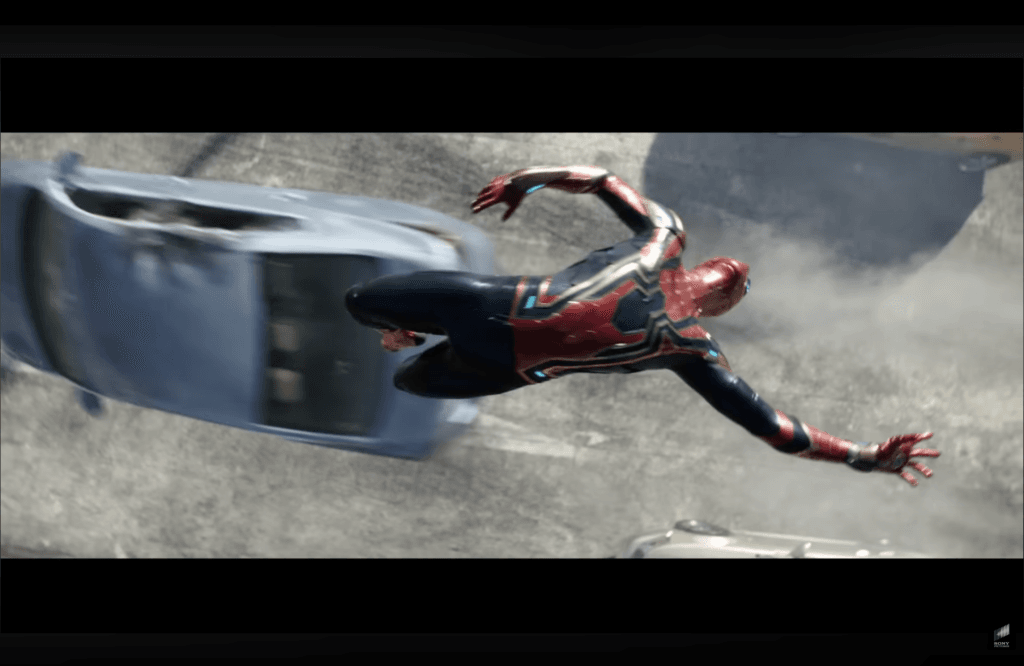
The sequence is a phenomenal mix of high-stakes action and utter confusion. Out of nowhere, massive mechanical tentacles rip through the asphalt. Doctor Otto Octavius emerges from the smoke, sees Tom Holland, and immediately attacks, thinking he’s fighting the Tobey Maguire version of Peter Parker.
The fight shifts gears beautifully when Doc Ock’s tentacles pin Peter down and begin ripping the nanotechnology off his Iron Spider suit. But the tech adapts, fusing with Otto’s mechanical arms and giving Peter complete, Bluetooth-style control over the villain’s rogue appendages.
Just as Peter manages to freeze the doctor in place, Otto looks closely at his face and utters those famous words: “You’re not Peter Parker.”
Before Peter can even process what that means, an eerie, green smoke begins rolling across the bridge. A cackling laugh echoes over the car alarms. A pumpkin bomb bounces across the concrete, and Norman Osborn comes roaring through the sky on his glider. The Green Goblin has officially entered the chat, and the stakes just went through the roof.
The Turning Point: Grief and the Arrival of Backup
Aunt May’s death leaves Tom Holland’s Peter Parker at his absolute lowest, completely broken and consumed by a dangerous desire for revenge. Distraught and on the run from the police, he retreats to a rooftop to grieve in isolation.
Meanwhile, Ned discovers he can open magical portals using Doctor Strange’s sling ring. Trying to find Peter, he accidentally summons two unexpected guests: the Peter Parkers from alternative dimensions (played by Tobey Maguire and Andrew Garfield). Tom Holland, Tobey Maguire, and Andrew Garfield unite in Spider-Man: No Way Home as the multiverse reaches its dramatic conclusion.
Three generations of Spider-Men unite. Source: Marvel.com
The Three Spider-Men Assemble
When the alternative Peters find Holland’s character, they share their own experiences with devastating loss—Tobey recalling Uncle Ben and Andrew remembering Gwen Stacy. This shared grief convinces a vengeful Peter to honor Aunt May’s legacy by finishing what he started: curing the villains rather than destroying them. Spider-Man: No Way Home Ending Explained
Using the combined scientific expertise of three generations, the Spider-Men set up a laboratory in Ned’s school to finish manufacturing the custom medical cures. They choose the under-construction Statue of Liberty—now holding Captain America’s shield—as the final battleground to cure the remaining rogue entities: Electro, Sandman, and the Lizard.
The Final Battle at the Statue of Liberty
The third act delivers an incredible showdown as the three Spider-Men learn to coordinate their fighting styles. Working as a unified team, they systematically deploy their scientific cures:
- Sandman is hit with a specialized dispersal agent, restoring Flint Marko back to his human form.
- The Lizard is exposed to an aerosol antidote, reverting Dr. Curt Connors back into his normal human self.
- Electro is stripped of his cosmic power grid when Doctor Octopus arrives—not as an enemy, but as an ally—to attach the newly perfected arc reactor siphon, returning Max Dillon to a regular human.
During the chaotic battle, the containment box holding Doctor Strange’s original spell is accidentally ruptured by a pumpkin bomb, causing reality to crack wide open. Doctor Strange, finally freed from the Mirror Dimension, struggles desperately to hold back the fracturing multiverse as alternative timelines threaten to bleed into the MCU.
The Ultimate Sacrifice and Ending Explained
The climax shifts to a brutal, deeply personal final fight on the fallen shield of the Statue of Liberty. Peter corners the Green Goblin, completely overpowering him. Consumed by rage over May’s death, Peter lifts the Goblin’s own glider, preparing to deliver a fatal strike.
Willem Dafoe’s sinister Green Goblin. Source: Business Insider
Tobey Maguire’s Spider-Man steps in, physically blocking the glider to prevent Holland’s Peter from crossing a line he can never walk back. Taking advantage of the distraction, the Goblin stabs Tobey in the back, but Andrew Garfield quickly hands Peter the perfected Goblin cure. Peter injects Norman Osborn, permanently suppressing the Goblin persona and restoring a deeply remorseful Norman to sanity.
With reality rapidly collapsing around them, Peter realizes there is only one way to save the multiverse. He tells Doctor Strange to cast a completely new spell: make everyone forget that Peter Parker ever existed.
What the Finale Means for Spider-Man’s Future
Strange casts the spell, sending the alternative Spider-Men and their cured villains back to their respective home dimensions just before the cracks in reality close. Spider-Man: No Way Home Ending Explained
The aftermath leaves Peter completely anonymous. He visits MJ at the donut shop where she works, intending to reveal the truth as promised. However, noticing the healing scar on her forehead—a reminder of the immense physical danger his presence causes—he makes the difficult choice to stay quiet, sacrificing his personal happiness to keep his friends safe.
The film ends with Peter moving into a tiny, run-down apartment in New York City. He has no Stark technology, no Avengers backing, and no loved ones left. He tunes into a police scanner, dons a homemade, classic red-and-blue comic-accurate suit, and leaps out into the snow. No Way Home serves as the definitive origin story for Tom Holland’s Spider-Man, leaving him stripped down to the absolute core of the character: a lonely, self-reliant, friendly neighborhood hero.
The Grief of a Hero: Peter’s Disappearance
Aunt May’s death leaves Tom Holland’s Peter Parker at his absolute lowest, completely broken and consumed by a dangerous desire for revenge. For the first time, the friendly neighborhood hero isn’t acting out of hope—he is driven by pure, blinding anger. He blames himself entirely: if he had just let Doctor Strange send the villains back to their deaths, May would still be alive.
Ignoring calls from Happy Hogan and hiding from MJ and Ned, Peter retreats to a rain-slicked rooftop to grieve in isolation. The Green Goblin’s twisted philosophy—that compassion is a weakness—seems to have finally broken Peter’s moral compass.
The Portal Opens: Enter Andrew Garfield
While Peter hides in the shadows, MJ and Ned desperately try to track him down inside the Sanctum Sanctorum. Ned, discovering he has a bizarre natural talent for using Doctor Strange’s Sling Ring, tries to open a gateway directly to Peter Parker.
The portal sparks to life, but the silhouette that steps through isn’t Tom Holland.
Instead, out walks the Peter Parker from The Amazing Spider-Man universe, played by Andrew Garfield. To prove he isn’t an impostor in a cheap costume, Andrew’s Peter immediately crawls onto the ceiling and catches a stray plate tossed by a skeptical MJ. This moment serves as far more than just a nostalgic cameo; Garfield’s Peter carries massive emotional scars from the night he failed to save Gwen Stacy. He admits that after her death, he stopped pulling his punches, grew dark, and lost his way—making him the perfect person to stop the MCU’s Peter from crossing that exact same line.
Tobey Maguire’s Wise Return
Hoping for a second chance at finding their friend, Ned tries the Sling Ring again. This time, a second portal opens to reveal a calm, casually dressed Tobey Maguire. Spider-Man: No Way Home Ending Explained
Representing the definitive live-action Spider-Man for an entire generation, Tobey’s Peter is older, wiser, and deeply centered. He doesn’t need a dramatic entrance; his quiet confidence shows he has long since processed the grief of losing Uncle Ben and Harry Osborn. Recognizing the multiversal chaos around them, Tobey and Andrew immediately agree to team up, tracking down the younger Peter before his grief completely consumes him.
Three Generations on a Rooftop
MJ and Ned finally bring the three heroes together on the roof of Midtown High. Rather than hitting Tom Holland’s Peter with empty platitudes, the two veteran Spider-Men simply share their rawest traumas:
Andrew: “I lost Gwen. My… she was my MJ. I couldn’t save her. I got bitter. I kept fighting, but I stopped pulling my punches.” Tobey: “I lost Uncle Ben. I thought killing the man who did it would make it better. It didn’t.”
This profound exchange completely shifts the movie from a standard superhero crossover into an exploration of collective healing. They remind the youngest Peter that every Spider-Man carries deep emotional scars, but what defines them is how they choose to carry that weight. Peter finally understands that honoring May means living by her values—not discarding them for a blood feud.
The Ultimate Science Fair: How the Trio Combines Forces
Once Peter’s hope is restored, the three Spider-Men pivot to what they do best: science. They transform a high school chemistry lab into a state-of-the-art medical facility, combining their unique generational strengths to craft custom cures for the remaining villains.
Redemption on the Scaffold: Curing the Lineup
The massive third-act battle takes place around the scaffolding of the under-construction Statue of Liberty. Moving as a coordinated team, the three Spider-Men systematically deploy their engineered remedies:
- Doctor Octopus: Otto Octavius is actually the first major success story. Thanks to the new neural inhibitor chip Peter built for him at Happy’s apartment, Otto’s mind is perfectly clear. He actually turns on the other villains, using his mechanical arms to protect the Spider-Men and catch an overloaded Electro.
- Electro: Max Dillon hovers in the sky, absorbing massive amounts of raw energy from the MCU grid. Working together, Tom and Andrew manage to corner him, strip away his external power source, and inject him with the cure. Restored to a normal, un-powered Max, he finally realizes he doesn’t need superpowers to be seen.
- Sandman & The Lizard: The final wildcards are quickly neutralized. Flint Marko is hit with a specialized matrix that stabilizes his loose sand, turning him back into a grateful human who can finally go home to his daughter. Meanwhile, Curt Connors is blasted with an aerosol antidote, permanently shedding his reptile scales and reverting into a normal man. Spider-Man: No Way Home Ending Explained
With almost the entire multiversal rogue’s gallery saved from their fates, only one threat remains on the battlefield. The Green Goblin has just arrived on his glider, and the MCU’s Peter Parker is forced to face his ultimate moral test.
Synchronization: Three Spider-Men Fight as One
The battle at the under-renovation Statue of Liberty—now sporting a massive replica of Captain America’s shield—is a massive visual spectacle, but it’s also an incredible narrative payoff. The three Spider-Men initially split up to tackle the villains, but because they’ve all spent years operating as solo acts, they completely trip over each other. They block each other’s webs, ruin each other’s sightlines, and look totally uncoordinated.
Realizing the chaos, Tom Holland’s Peter groups them up on the scaffolding for a quick huddle. He takes the lead, designating them “Peter 1, Peter 2, and Peter 3,” and establishes a real game plan.
What follows is an absolute masterclass in superhero teamwork. Once they synchronize, they move like a fluid machine—passing web-lines, covering each other’s blind spots, and swinging in perfect formation through the construction grid. It is an incredible love letter to twenty years of cinema, showing that Spider-Man’s greatest strength isn’t just his powers, but his capacity to adapt and protect others.
Redemptions on the Scaffold: Doc Ock and Electro
The tide of the battle shifts dramatically when Doctor Octopus arrives. For a split second, it feels like the heroes are outnumbered, but Otto reveals he’s completely on their side. Using his massive mechanical arms, he restrains Electro, cutting him off from the Arc Reactor that powers the island.
With Max Dillon pinned, Peter 1 administers the specialized siphon cure, draining the volatile energy out of him. As the glowing yellow energy fades, Max is left sitting on the scaffolding as a regular human. In a quiet, beautifully acted moment with Andrew Garfield’s Peter, Max admits he just wanted to feel important. Andrew reassures him that he was always spectacular, giving Max the peace and validation he never got back in his own universe.
The Ultimate Second Chance: Andrew Catches MJ
The most emotionally devastating callback in the entire film happens in the middle of this structural chaos. The Goblin blows up the scaffolding, causing MJ to lose her footing and plummet toward the ground. Tom Holland’s Peter leaps after her, but the Goblin’s glider cuts him off mid-air, knocking him aside. Spider-Man: No Way Home Ending Explained
Seeing history about to repeat itself, Andrew Garfield’s Spider-Man dives into a dead sprint off the scaffolding.
The framing of this shot directly mirrors the tragic climax of The Amazing Spider-Man 2, where Andrew failed to save Gwen Stacy. But this time, he shoots a web, accelerates his descent, and catches MJ firmly in his arms, landing safely in the dust. As he checks to see if she’s breathing, he completely breaks down, suffocated by tears and a massive sense of relief. It’s a stunning, wordless sequence that grants Andrew’s Peter the emotional closure and redemption he’s been chasing through years of grief.
Blood and Bricks: The Final Face-Off with the Goblin
With the rest of the villains completely cured, the movie strips away all the multiversal spectacle for a brutal, bone-crunching final brawl between Peter 1 and the Green Goblin on Cap’s fallen shield.
There are no witty quips, no high-tech gadgets, and no flashy Avenger-level choreography here. It is an ugly, feral fistfight fueled by pure trauma. The Goblin laughs maniacally through the punches, mocking Peter and trying to prove that heroism is a joke and that Peter is just as monstrous as he is.
For a terrifying moment, it looks like the Goblin is winning the psychological war. Peter completely loses control, pinning Norman Osborn to the ground and violently smashing his fists into his face, driven by pure, unadulterated revenge.
Tobey Maguire’s Ultimate Sacrifice
Peter 1 lifts the heavy, sharp-edged Goblin Glider above his head, fully intending to drive it through Norman’s chest to avenge Aunt May. The Goblin just smiles, knowing that if Peter takes his life, his morality dies with it.
Before the fatal blow can land, Tobey Maguire’s Spider-Man steps directly into the frame, grabbing the glider and physically halting its descent. Tobey doesn’t say a word; he just looks into the younger Peter’s eyes with an expression of deep, paternal understanding. Don’t walk down this path.
Peter 1 looks at his older counterpart, the rage slowly draining out of him as he realizes how close he just came to ruining his soul. But the Goblin exploits the distraction, pulling a hidden blade and stabbing Tobey directly in the back. The audience gets a massive scare, but Tobey stands his ground, wincing through the pain to assure Peter he’s going to be fine. His sacrifice successfully saves Tom Holland’s Peter from making a mistake he could never take back.
Curing the Demon
With his head finally clear, Peter 1 grabs the green antidote vial and stabs it into Norman’s neck. The transformation is instant. The twisted, sneering Green Goblin persona melts away, leaving a fragile, disoriented Norman Osborn who has no idea where he is or what he’s done. Spider-Man: No Way Home Ending Explained
Looking down at a frightened, broken old man instead of a cosmic monster, Peter finally understands why Aunt May fought so hard for these people. Executing him wouldn’t have brought justice; it just would have created more darkness. By choosing medicine over murder, Peter fully embraces the true meaning of responsibility.
The Multiverse Fractures: Strange’s Final Stand
While the fight on the ground ends, the sky above Liberty Island turns into an absolute nightmare. Doctor Strange finally breaks out of the Mirror Dimension, only to find the sky tearing open in massive, neon-purple fissures.
The original, botched memory spell has completely ruptured the barriers of the MCU. Strange uses every ounce of his mystical energy to hold the cracks together, but the fabric of reality is moving past his control. Through the glowing tears in the sky, the silhouettes of countless entities from across the multiverse—everyone who has ever known Peter Parker’s secret—start pressing against the barrier, ready to flood the universe. The timeline is minutes away from total collapse.
The Hardest Choice: Erasing Peter Parker
Peter swings up to Doctor Strange and realizes there is only one logical way to seal the dimensional cracks. He looks at the sorcerer and tells him to cast a new spell: don’t make them forget Spider-Man; make the entire world forget Peter Parker ever existed.
Strange is visibly stunned by the gravity of the request. He warns Peter of the absolute isolation this means: MJ won’t know him, Ned will look right through him, and Happy Hogan won’t remember their bond. Every single record, memory, and trace of his existence will be completely wiped from human consciousness.
Peter accepts the terms without hesitation. For the first time in the entire film, he doesn’t try to negotiate a magical shortcut or ask for exceptions. He stands as a true hero, willingly choosing absolute personal ruin to save the universe. It is the ultimate, heartbreaking definition of what it actually means to wear the mask.
The Ultimate Sacrifice: Erasing Peter Parker
The ending of Spider-Man: No Way Home stands as one of the absolute most emotional, gut-wrenching sequences in the entire history of the Marvel Cinematic Universe. For years, fans watched Tom Holland’s Peter Parker operate under the safety nets of billionaire mentors, high-tech nanotechnology, and global superhero networks. This finale strips all of that away, forcing him to make the ultimate choice to protect reality itself.
As the multiversal fissures threaten to tear the sky apart, Doctor Strange lays out the cold, hard truth: the only way to seal the cracks is to rewrite the original spell entirely. The universe doesn’t need to forget Spider-Man; it has to completely forget that Peter Parker ever existed.
It is a profound, incredibly tragic sacrifice. The spell doesn’t just wipe his digital footprint—it completely deletes him from the minds of everyone who ever loved him. He isn’t dead, but to the world, he never was. The spell successfully closes the gates, snapping Tobey Maguire, Andrew Garfield, and the cured villains safely back to their respective timelines, but it leaves Peter standing in the debris of Liberty Island as a total ghost.
The Heartbreak at the Donut Shop: Why Peter Stays Silent
Before the universe resets, Peter shares a devastating goodbye with MJ and Ned on the Statue of Liberty, promising them with absolute certainty that he will find them, make them remember, and fix this.
Cut to a few weeks later. Peter walks into Peter Pan Donuts, the coffee shop where MJ works, with a written-out script in his pocket to explain the multiversal madness. MJ smiles politely at him, but her eyes are completely blank—she treats him like any other random customer ordering a coffee. Ned walks in a moment later, bumping into Peter without a single flicker of recognition. Spider-Man: No Way Home Ending Explained
Peter gets ready to read his script and break the news, but then he pauses. He catches a glimpse of a small, healing laceration on MJ’s temple—a physical scar from the brutal battle at the Statue of Liberty.
In that exact moment, Peter undergoes his final, massive step into adulthood. He realizes that every single time he pulls the people he loves into his superhero orbit, they end up bleeding for it. He understands that the most responsible, loving thing he can do for MJ and Ned is to leave them alone so they can go to MIT and live happy, safe lives free of supervillains. Breaking his own heart to ensure their safety, he pockets the note, orders his coffee, and quietly exits their lives.
Grieving with a Stranger: The Funeral Scene
The sheer isolation of Peter’s new reality hits like a freight train during Aunt May’s quiet funeral service. Peter stands by her gravestone, entirely alone, until Happy Hogan approaches him.
The ensuing conversation is absolutely devastating because of what isn’t being said:
Happy: “How’d you know her?”
Peter: “Through Spider-Man. You?”
Happy: “Same. Through Spider-Man.”
Happy is standing right next to the kid he helped raise, the kid he protected, and the kid who was a surrogate son to Tony Stark—and he has absolutely no clue. They are mourning the exact same woman, but they are doing it as total strangers. When Peter says he knew May “through Spider-Man,” it underscores just how thoroughly his human identity has been excised from the world.
Back to Basics: The Classic New Suit and Status Quo
The final minutes of the film act as a complete, ground-up reset for the franchise, transitioning Tom Holland out of the “Iron Boy Jr.” era and dropping him directly into the classic, street-level comic book aesthetic fans have craved for years.
We see Peter moving into a tiny, incredibly bleak, run-down apartment in New York City. He has no Stark tech, no EDITH glasses, no AI interface, and no Avengers funding. He missed his high school finals during the multiversal crisis, so we see a GED study guide sitting on his desk next to a sewing machine. Spider-Man: No Way Home Ending Explained
Anatomy of the New Homemade Suit
Instead of printing a suit from a multi-million dollar Stark fabricator, Peter hand-sews his new costume from scratch using cheap fabric. The design is a massive statement:
Classic Palette: A vibrant, high-gloss blue and traditional red that looks like it was ripped directly out of a classic 1960s comic panel.
Zero Tech: No built-in parachutes, no mechanical drone companions, and no armored plating. It is just cloth, thread, and lenses.
True Independence: The suit symbolizes that he is no longer anyone’s protégé. He isn’t an Avenger-in-training; he is purely, fully Spider-Man.
As the film closes, Peter tunes into a cheap police scanner, cracks open his window, and leaps out into the freezing New York winter, swinging past the Rockefeller Center Christmas tree.
The Legacy Left Behind: Tobey and Andrew’s Closure
While the ending is undeniably bittersweet for the MCU’s Peter, it serves as a beautiful, redemptive final chapter for the alternate Spider-Men. They don’t just return home as empty fan-service cameos; they leave with their fractured narrative arcs entirely healed:
Andrew Garfield’s Peter catches MJ, successfully exorcising the ghost of Gwen Stacy’s death that had embittered him for years. He goes back to his universe with his faith in heroism fully restored.
Tobey Maguire’s Peter successfully steps in front of a glider to stop a younger hero from committing murder, ensuring his own long-standing wisdom about revenge preserves another Spider-Man’s innocence.
Ultimately, No Way Home’s ending reframes the entire Tom Holland trilogy. It reveals that the first three movies weren’t just a traditional superhero origin story—they were a long, arduous journey to strip Peter Parker down to his absolute baseline. He loses his family, his friends, his wealth, and his mentor, but as he glides through the snow-covered canyons of Manhattan, he has finally, truly become the definitive Spider-Man. Spider-Man: No Way Home Ending Explained
Frequently Asked Questions
1. What is the ending of Spider-Man: No Way Home?
At the end of the movie, Peter Parker asks Doctor Strange to cast a spell that makes everyone forget he exists. This repairs the multiverse but leaves Peter completely alone, with no one remembering his identity.
2. Why does everyone forget Peter Parker?
Doctor Strange’s spell erases Peter Parker from everyone’s memory to stop the multiverse from collapsing after the failed memory spell.
3. Does MJ remember Peter at the end of No Way Home?
No. MJ no longer remembers Peter Parker after Doctor Strange’s spell, although the movie hints she feels a faint sense of familiarity when they meet again.
4. Why did Aunt May die in Spider-Man: No Way Home?
Aunt May is killed by the Green Goblin after encouraging Peter to help cure the villains. Before she dies, she tells Peter, “With great power, there must also come great responsibility.”
5. Why do Tobey Maguire and Andrew Garfield appear in No Way Home?
The failed spell opens the multiverse, bringing Spider-Men and villains from other universes into the Marvel Cinematic Universe.
6. Does Green Goblin die in Spider-Man: No Way Home?
No. Peter cures Norman Osborn with an antidote instead of killing him, restoring him to his normal personality.
7. Will there be another Tom Holland Spider-Man movie?
Yes. Marvel Studios and Sony have confirmed that Tom Holland will return as Spider-Man in future films.
8. Is Spider-Man: No Way Home connected to Doctor Strange in the Multiverse of Madness?
Yes. The events of No Way Home directly lead into Doctor Strange in the Multiverse of Madness, where the multiverse continues to play a major role.
ALSO READ:- https://movieexplainedhub.com/minions-monsters-trailer-breakdown/
ALSO READ:- https://movieexplainedhub.com/young-washington-movie/
Marvel Official
URL: https://www.marvel.com/movies/spider-man-no-way-home
Anchor Text:
Marvel’s official Spider-Man: No Way Home page
2. Sony Pictures
URL: https://www.sonypictures.com/movies/spidermannowayhome
Anchor Text:
Sony Pictures’ Spider-Man: No Way Home
3. IMDb
URL: https://www.imdb.com/title/tt10872600/
Anchor Text:
View the full Spider-Man: No Way Home cast and crew on IMDb
4. Rotten Tomatoes
URL: https://www.rottentomatoes.com/m/spider_man_no_way_home
Anchor Text:
Read Spider-Man: No Way Home reviews on Rotten Tomatoes
5. Marvel Database (Fandom)
URL: https://marvel.fandom.com/wiki/Spider-Man:_No_Way_Home