Index
- Introduction
- Release Date, Director & Budget
- Cast & Characters Explained
- Why This Resident Evil Reboot Feels Different
- Resident Evil Story Setup Explained
- Scene Breakdown & Hidden Meanings
- What Happens When Humanity Becomes The Experiment?
- Umbrella Corporation Explained
- Psychological Horror & Emotional Themes
- Hidden Details & Easter Eggs
- Future Sequel Theories
- Final Thoughts
- FAQ
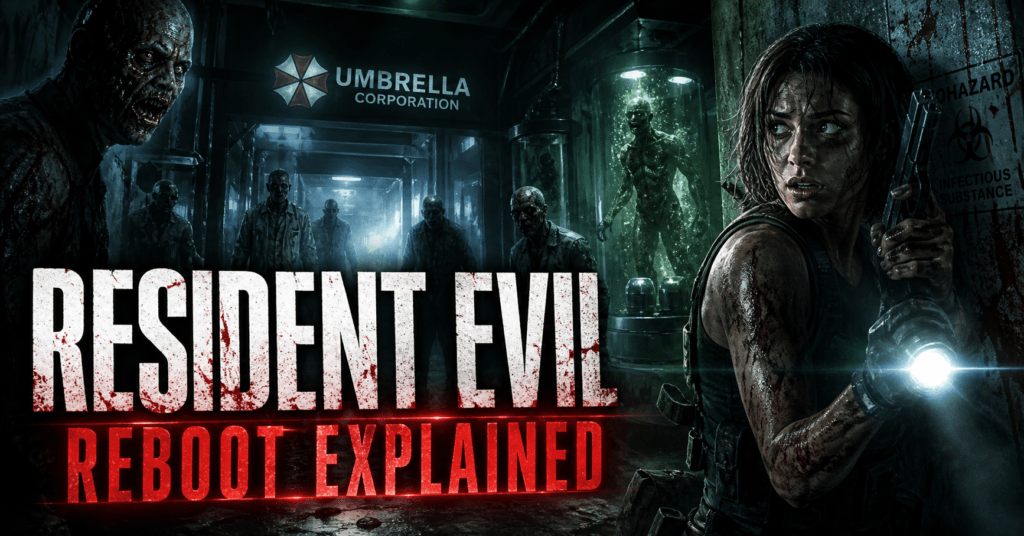
The Infection Was Never The Real Horror…
By the end of Resident Evil, the world may already be beyond saving.
Not because of zombies.
Not because of monsters.
But because humanity crossed a line it was never supposed to cross.
That’s what makes Resident Evil terrifying when it’s done right.
The creatures are horrifying, yes.
But the deeper fear always comes from people.
Scientists playing god.
Corporations treat human life like data.
Entire cities are collapsing because greed has become more important than morality.
And honestly?
That’s why this reboot suddenly feels important again.
For years, Resident Evil movies became louder and bigger.
But the fear disappeared.
The loneliness disappeared.
The psychological dread disappeared.
This time feels different.
Darker.
Slower.
More personal.
Like the horror is crawling underneath the skin again.
And honestly?
That’s exactly what longtime fans have waited decades to see.
Introduction
The Resident Evil franchise has always been more than a zombie story.
Beneath the outbreaks and horrifying mutations lies something emotionally disturbing:
humanity destroying itself through obsession and arrogance.
That’s why the games became legendary.
They trapped players inside:
- silence
- dark hallways
- emotional isolation
- uncertainty around every corner
You never felt powerful.
You felt vulnerable.
And honestly?
That vulnerability is what made Resident Evil unforgettable.
The new reboot appears ready to return to those roots.
Not superhero action.
Not endless explosions.
But survival horror.
Real fear.
The kind that slowly suffocates people emotionally.
Release Date, Director & Budget
Release Date
September 18, 2026
Distributed by:
Columbia Pictures
Production companies:
- Constantin Film
- Davis Films
- Vertigo Entertainment
- PlayStation Productions
Director
Directed by:
Zach Cregger
After:
Barbarian
Horror fans started viewing Zach Cregger as one of modern horror’s most unpredictable filmmakers.
His horror style feels uncomfortable in the best possible way.
Not because of gore alone.
But because he understands:
Fear comes from emotional instability.
Audiences stop feeling safe in his movies.
And honestly?
That’s exactly the tone Resident Evil desperately needed.
Estimated Budget
The official budget has not been confirmed yet.
But industry expectations suggest the reboot could land somewhere between:
$60–90 million
Which, honestly, may help the movie.
Because smaller horror budgets often force filmmakers to focus more on:
- atmosphere
- tension
- psychological fear
instead of a nonstop CGI spectacle.
Cast & Characters Explained
Austin Abrams
Austin Abrams specializes in emotionally anxious characters.
His performances naturally feel:
- vulnerable
- nervous
- emotionally overwhelmed
Which makes him perfect for survival horror.
Because Resident Evil works best when characters feel genuinely terrified.
Kali Reis
Kali Reis brings emotional toughness and physical intensity.
She feels like the kind of survivor who keeps moving even while emotionally breaking apart inside.
Paul Walter Hauser
His casting feels especially interesting.
Because he often portrays emotionally unstable outsiders carrying:
- loneliness
- unpredictability
- hidden sadness
And honestly?
That emotional discomfort fits Resident Evil perfectly.
Zach Cherry
Zach Cherry brings grounded realism.
The kind of human energy that makes horror feel believable instead of cinematic.
Why This Resident Evil Reboot Feels Different
Previous Resident Evil movies slowly abandoned horror.
The franchise became focused on:
- action sequences
- explosions
- superhuman battles
But the original games were terrifying because they felt:
- trapped
- claustrophobic
- emotionally hopeless
You feared every hallway.
Every sound.
Every door opens slowly in silence.
And honestly?
This reboot finally seems ready to bring that fear back.
Especially because Zach Cregger understands psychological horror.
His films don’t simply scare audiences.
They emotionally exhaust them.
Resident Evil Story Setup Explained
The reboot reportedly returns to:
- biological outbreaks
- Umbrella experiments
- isolated survival horror
- underground laboratories
- collapsing civilization
But beneath the zombies lies something emotionally darker.
The infection represents:
- greed spreading uncontrollably
- humanity losing identity
- Science evolving without ethics
And honestly?
That’s why Resident Evil feels psychologically terrifying.
Because the infected are not monsters born evil.
They were once human.
Scene Breakdown & Hidden Meanings
The Hallway Fear
One of Resident Evil’s most iconic horror techniques is silence.
Characters slowly walking through dark hallways create emotional paranoia before violence even appears.
That silence matters.
Because fear grows strongest when audiences imagine danger before seeing it.

The Infection Scene Explained
Transformation scenes in Resident Evil feel horrifying because they symbolize identity collapsing.
Victims lose:
- memory
- emotion
- humanity
And honestly?
That emotional tragedy is what separates Resident Evil from generic zombie stories.
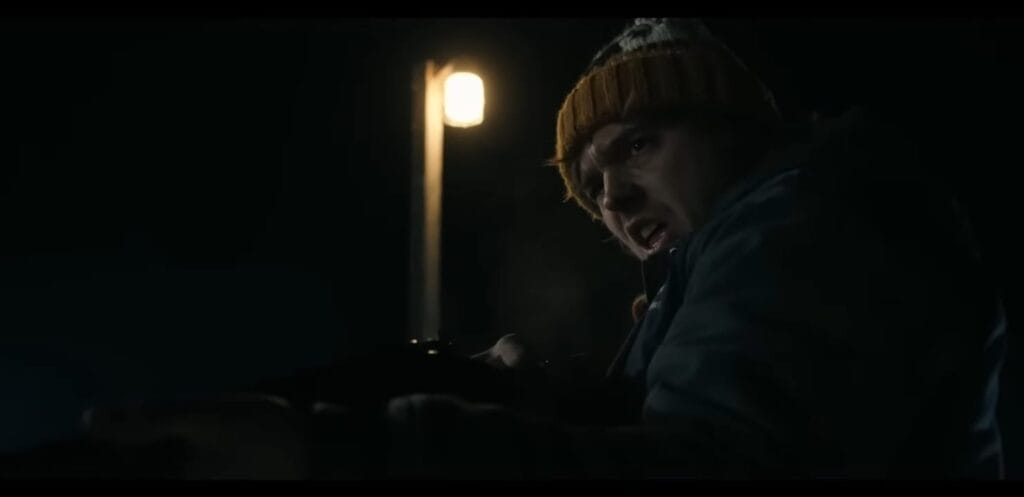
The Laboratory Symbolism
Underground labs symbolize hidden human arrogance.
Science operating without morality.
Entire experiments are buried beneath civilization itself.
Almost like humanity hiding its sins underground.
The Mansion Explained
If the reboot uses Spencer Mansion inspiration, the building itself becomes symbolic.
It represents:
- secrets
- isolation
- hidden evil beneath luxury
- humanity trapped inside its own corruption
Every locked door feels emotionally oppressive.
The Infection Was Never The Real Horror…
By the end of Resident Evil, the world may already be beyond saving.
Not because of the zombies.
Not because of the mutations.
But because humanity created something it was never supposed to control.
That’s what makes Resident Evil terrifying when it’s done right.
The monsters are horrifying.
But the deeper fear always comes from people.
Corporate greed.
Scientific obsession.
Human beings are pushing life itself beyond moral limits.
And honestly?
That’s why this reboot suddenly feels so important.
Because for the first time in years, Resident Evil finally looks ready to embrace psychological horror again instead of pure action spectacle.
The darkness feels slower now.
More intimate.
More disturbing.
Like the outbreak is not simply destroying bodies…
but humanity itself.
Why The Resident Evil Reboot Matters So Much
For years, Resident Evil adaptations struggled with identity.
The movies became bigger.
Louder.
More explosive.
But somewhere along the way…
The fear disappeared.
The original games were terrifying because they trapped players inside:
- silence
- isolation
- claustrophobic hallways
- limited resources
- and the horrifying feeling that safety no longer existed anywhere.
That emotional dread is what made Resident Evil legendary.
And honestly?
This reboot may finally understand that.
Especially with:
Zach Cregger
directing the film after:
Barbarian
Because Barbarian proved something important:
Fear becomes strongest when audiences lose trust in reality itself.
Resident Evil Ending Explained
While official plot details remain secret, the reboot appears heavily inspired by the survival horror roots of the franchise.
And honestly?
That changes everything emotionally.
Because Resident Evil works best when the story feels trapped.
Not heroic.
The likely ending may revolve around survivors uncovering the horrifying truth behind the outbreak:
Umbrella Corporation never intended to save humanity.
The virus was always about control.
Power.
Experimentation without morality.
And once that truth fully emerges, the movie stops feeling like a zombie story…
and starts feeling like humanity is collapsing under its own arrogance.
The Hidden Meaning Behind The Infection
The infection in Resident Evil has always symbolized something deeper than disease.
It represents:
- corruption spreading invisibly
- humanity losing identity
- fear of becoming uncontrollable
- Science evolving beyond ethics.
That’s why the monsters feel so disturbing emotionally.
They were once human.
And honestly?
That detail makes Resident Evil psychologically darker than most zombie franchises.
Because the horror is not death.
It’s a transformation.
Watching humanity slowly become unrecognizable.
The Mansion & Isolation Explained
If the reboot returns to the classic mansion atmosphere from the games, that setting itself becomes symbolic.
The mansion represents:
- secrets buried underground
- corporate lies
- isolation from the outside world
- hidden experimentation
Every hallway feels emotionally suffocating.
Every locked door creates paranoia.
And honestly?
Resident Evil becomes scariest when characters feel emotionally trapped instead of physically overwhelmed.
Because isolation destroys trust first.
Then survival.
Why The Creatures Feel More Terrifying Now
Modern horror audiences no longer fear monsters alone.
They fear:
- unpredictability
- infection
- losing control
- psychological collapse
That’s why this reboot feels more dangerous emotionally.
The infected creatures are horrifying because they represent:
ALSO READ:- https://movieexplainedhub.com/exit-8-ending-explained/
ALSO READ:- https://movieexplainedhub.com/spider-man-brand-new-day-movie-explained/
ALSO READ:- https://movieexplainedhub.com/interstellar-movie-explained/
ALSO READ:- https://movieexplainedhub.com/oppenheimer-movie-explained-full-story-ending-explained-complete-breakdown/
ALSO READ:- https://movieexplainedhub.com/dune-2-movie-explained-full-story-ending/
ALSO READ:- https://movieexplainedhub.com/gladiator-2-movie-explained-ending-breakdown/
ALSO READ:- https://movieexplainedhub.com/18th-rose-ending-explained/
ALSO READ:- https://movieexplainedhub.com/godzilla-x-kong-the-new-empire-explained/
ALSO READ:- https://movieexplainedhub.com/hollow-earth-explained/
ALSO READ:- https://movieexplainedhub.com/scar-king-explained/
ALSO READ:- https://movieexplainedhub.com/godzilla-x-kong-the-new-empire-explained/
ALSO READ:- https://movieexplainedhub.com/monsterverse-movies-in-order/
ALSO READ:- https://movieexplainedhub.com/avatar-movie-ending-explained/
ALSO READ:- https://movieexplainedhub.com/dust-bunny-movie-explained/
ALSO READ:- https://movieexplainedhub.com/godzilla-x-kong-supernova-explained/
ALSO READ:- https://movieexplainedhub.com/spacegodzilla-explained/
ALSO READ:- https://movieexplainedhub.com/remarkably-bright-creatures-netflix-movie/
ALSO READ: –https://movieexplainedhub.com/person-of-interest-explained/
ALSO READ:- https://movieexplainedhub.com/kongs-axe-explained-monsterverse-secrets/
ALSO READ:- https://movieexplainedhub.com/mortal-kombat-2-ending-explained/
humanity mutating into something emotionally empty.
Something driven only by instinct.
And honestly?
That idea feels disturbingly relevant today.
Umbrella Corporation Explained
The true villain of Resident Evil was never just zombies.
It was always:
Umbrella Corporation
The company symbolizes:
- unchecked corporate greed
- scientific obsession
- profit over morality
- emotional detachment from human suffering
And honestly?
That’s why Umbrella feels terrifying.
Because it doesn’t view people as human beings.
Only as experiments.
The outbreak is simply the moment those experiments escape control.
Hidden Outbreak Details You Missed
The Silence Matters
Resident Evil’s best horror moments often happen in silence.
That quiet atmosphere creates emotional paranoia before violence even begins.
The Infection Is Psychological Too
Characters don’t just fear dying.
They fear:
- becoming infected
- losing identity
- hurting others
- becoming monsters themselves
That emotional fear makes the outbreak feel deeply personal.
Claustrophobic Horror
Tight hallways and confined environments create emotional suffocation.
The reboot appears focused more on:
- survival tension
- fear of the unknown
- emotional panic
instead of large-scale explosions.
Why Zach Cregger Could Save The Franchise
This may be the most important part of the reboot.
Because Zach Cregger understands:
uncomfortable horror.
His films create fear through:
- emotional uncertainty
- psychological instability
- disturbing unpredictability
rather than nonstop action.
And honestly?
Resident Evil desperately needed that tone shift.
Because survival horror only works when audiences feel:
- vulnerable
- anxious
- emotionally unsafe
Resident Evil Hidden Details & Easter Eggs
The reboot will likely include references to:
- Spencer Mansion
- Umbrella experiments
- classic infected creatures
- hidden laboratory symbolism
- bio-weapon lore
- game-inspired puzzles
- underground facilities
Fans are also expecting visual callbacks to:
- Resident Evil 1
- Resident Evil 2
- Resident Evil 7
especially the darker survival-horror atmosphere.
Emotional Themes Hidden Inside Resident Evil
Underneath the monsters, Resident Evil has always been about:
- fear
- survival
- identity
- corporate corruption
- isolation
- emotional collapse
The outbreak destroys more than civilization.
It destroys trust.
Humanity begins viewing each other as threats instead of people.
And honestly?
That emotional breakdown is what makes Resident Evil terrifying.
Future Sequel Theories Explained
The Global Infection Theory
The reboot may end by revealing the outbreak has already spread far beyond containment.
Meaning the nightmare is only beginning.
Umbrella’s Real Goal
Some theories suggest Umbrella may intentionally allow outbreaks to expand in order to test bio-weapons globally.
This makes the corporation even darker morally.
Stronger Bio-Weapons Incoming
Future sequels could introduce:
- Tyrants
- advanced mutations
- psychological experiments
- human-controlled monsters
expanding the horror far beyond zombies alone.
Civilization Collapse
The franchise may slowly transition from isolated horror into full societal collapse.
And honestly?
That escalation could become emotionally devastating if handled incorrectly.
Why Resident Evil Still Works Emotionally
Most zombie stories are about survival.
Resident Evil is different.
It’s about:
- humanity destroying itself
- science losing morality
- People are becoming emotionally disconnected.
- fear spreading faster than the infection
That emotional darkness is why the franchise survived for decades.
Because beneath the monsters lies a terrifying question:
What Happens When Humanity Becomes The Experiment?
This is the question hidden beneath every version of Resident Evil.
And honestly?
It’s the reason the franchise feels so much darker than a normal zombie story.
Because Resident Evil was never truly about monsters.
It was about humanity losing control of itself.
The infected are terrifying, yes.
But the deeper horror comes from something far more disturbing:
people willingly turning human life into a laboratory.
That’s what makes the Umbrella Corporation so frightening emotionally.
The company stopped seeing humanity as human.
People became:
- test subjects
- biological material
- disposable experiments
- data inside a corporate nightmare
And once that line disappears…
Civilization itself begins to collapse emotionally.
The Virus Is More Than A Disease
The infection represents:
- greed spreading without limits
- Science evolving without morality.
- humanity abandoning empathy
- identity being erased piece by piece
That’s why the transformations feel horrifying.
The infected lose:
- memory
- personality
- emotion
- humanity itself
And honestly?
That fear is psychologically devastating.
Because Resident Evil forces audiences to imagine:
What if people stopped being people…
while still technically alive?
Umbrella’s Most Terrifying Idea
Umbrella doesn’t simply create monsters.
It creates a world where:
human beings become products.
That’s the real horror.
Not the zombies.
Not the mutations.
However, there is a complete emotional detachment behind the experiments.
The corporation believes:
- Evolution matters more than ethics.
- Control matters more than life.
- Survival matters more than humanity.
And that ideology slowly infects the world emotionally before the virus even spreads physically.
Why The Horror Feels So Personal
Most apocalypse stories focus on society collapsing externally.
Resident Evil feels different because the collapse begins internally.
Inside the body.
Inside the mind.
Inside human identity itself.
The infected are tragic because they remind survivors of what they used to be.
Friends.
Families.
Children.
Scientists.
Ordinary people.
And honestly?
That emotional tragedy makes the horror unforgettable.
Because every monster was once someone human.
The Scariest Part Of Resident Evil
The most disturbing idea in Resident Evil is not:
“Can humanity survive?”
It’s:
“Does humanity still deserve to survive after creating this?”
That moral darkness is what gives the franchise emotional weight.
Because the outbreak is not an accident anymore.
It becomes:
- punishment
- consequence
- proof of human arrogance
And once humanity becomes the experiment…
The world stops feeling safe forever.
Final Thoughts
Resident Evil already feels less like a reboot…
and more like a second chance for survival horror itself.
Because the franchise was never truly about action.
It was about:
- fear
- isolation
- infection
- corruption
- And humanity is slowly losing control of the horrors it created.
And honestly?
If this reboot fully embraces the psychological terror of the original games…
Resident Evil could finally become the terrifying cinematic nightmare fans have waited decades to see.
The outbreak is coming back.
But this time…
The fear feels real again.
- https://www.imdb.com/title/tt13186482/
- https://www.gamesradar.com/entertainment/horror-movies/resident-evil-movie-release-date-cast-trailer-plot/
- https://variety.com/tag/resident-evil/
- https://deadline.com/tag/resident-evil/
- https://www.ign.com/franchises/resident-evil
- https://www.capcom.com/
- https://www.playstation.com/en-us/games/resident-evil/
- https://screenrant.com/tag/resident-evil/
FAQ
What is the Resident Evil reboot about?
The reboot reportedly returns to the survival horror roots of the games, focusing on psychological fear, infection, and the Umbrella Corporation outbreak.
Who is directing Resident Evil 2026?
The movie is directed by Zach Cregger, known for the horror film Barbarian.
Will the reboot be connected to the old Resident Evil movies?
No, the reboot is expected to restart the franchise with a darker and more game-faithful horror approach.
What is the Umbrella Corporation?
Umbrella Corporation is the powerful company responsible for dangerous biological experiments that trigger the outbreak.
Why are fans excited about this reboot?
Fans believe the reboot may finally bring back:
- survival horror
- psychological fear
- claustrophobic tension
- and the terrifying atmosphere of the original games.